Skip to content
If you’re getting ready to sell, your window shades and blinds deserve more attention than most sellers give them. Real estate agents consistently point to fresh, neutral window treatments as one of the fastest, cheapest ways to make a home photograph better and feel move-in ready. In short: swap out anything yellowed, broken, or heavy for clean, light-filtering shades or blinds in white or soft neutral tones, and make sure every window facing the street matches.
Buyers decide how they feel about a home within seconds of walking in, and windows set the tone for that first impression. Dusty mini blinds, mismatched curtains, or bare glass all send the same message: this house needs work. Updated blinds and shades send the opposite one, and that’s exactly why staging professionals treat them as a priority, not an afterthought.
Contents
Why Window Treatments Matter More Than Sellers Realize
Natural light is one of the most requested features among home buyers, and what’s hanging on your windows either lets that light in or blocks it. Agents will tell you that listing photos drive the first round of interest in a home, and photographers routinely adjust or remove outdated window coverings before a shoot because they change how a room reads on camera.
There’s also a resale distinction worth knowing. Hard treatments, like blinds and shutters, are generally expected to stay with the house and get treated as fixtures. Soft treatments like curtains usually leave with the seller. That means the custom window blinds you install before listing become part of the home’s perceived value, not just a decorating choice.
What Real Estate Agents Recommend for Staging Windows
Agents and professional stagers tend to repeat the same handful of recommendations, no matter the price point of the home:
- Choose neutral colors. White, cream, and soft gray photograph cleanly and appeal to the widest range of buyers.
- Keep every street-facing window consistent. A uniform look from the outside reads as cohesive and well cared for.
- Favor a minimal stack. Treatments that pull back cleanly out of the way let in the maximum amount of light for showings.
- Replace anything visibly worn. Bent slats, yellowed vinyl, or torn cords are an easy fix that pays off in buyer perception.
- Prioritize rooms buyers linger in. Living rooms, primary bedrooms, and kitchens get the most attention during a walkthrough.
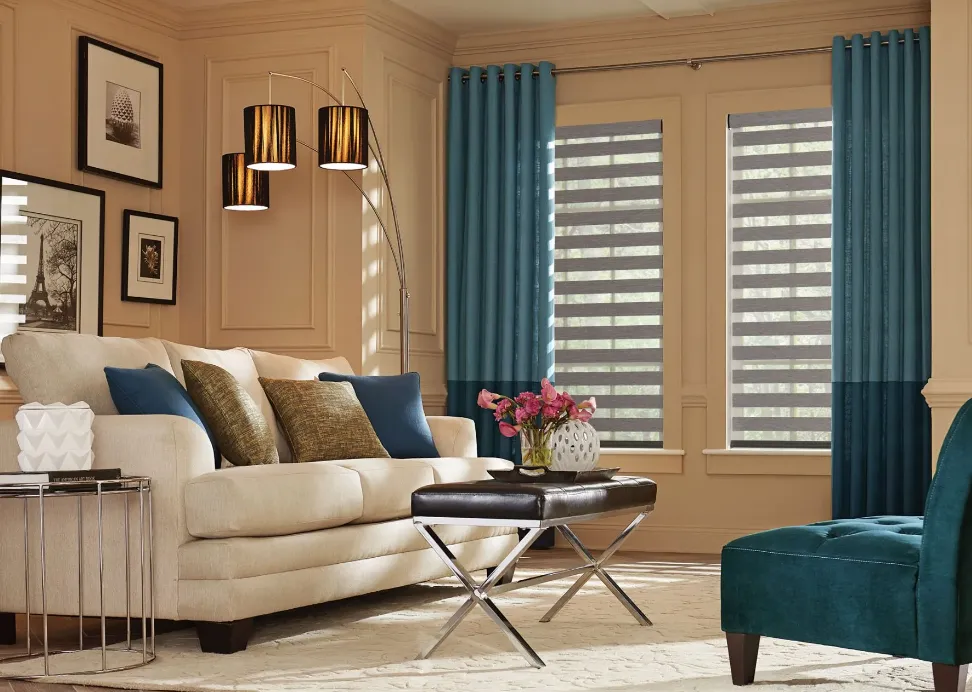
For sellers on a tighter staging budget, light-filtering roller shades are one of the most common recommendations. They’re simple, affordable across a whole house, and they lie flat against the window when raised, so the glass stays unobstructed for photos.
Which Wins for Staging: Blinds and Shades?
There’s no single right answer, and the best choice usually depends on the room and the budget. Blinds use individual slats you can angle for precise light and privacy control, which agents often recommend for kitchens and home offices where flexibility matters. Shades use a single piece of material that raises and lowers as one unit, giving a smoother, more streamlined look that tends to photograph especially well in living rooms and primary suites.
If you want energy efficiency to be part of your pitch to buyers, cellular shades are worth a look. Their honeycomb construction adds insulation, which is a practical selling point buyers notice when they ask about utility costs. Whichever you land on, matching materials and colors from room to room does more for staging than any single product choice.
Common Window Treatment Mistakes That Turn Buyers Off
A few missteps show up again and again in homes that sit on the market longer than expected:
- Heavy, dark drapery left up. It reads as dated and makes rooms feel smaller and dimmer than they are.
- Mismatched treatments from room to room. Buyers notice the lack of consistency even if they can’t name why a house feels unfinished.
- Bare windows in rooms that need privacy. An unfinished window can make a space feel incomplete in photos and in person.
- Ignoring the view from the street. Mismatched backing colors on street-facing windows hurt curb appeal before a buyer ever walks in.
The fix for most of these is simpler than sellers expect: a consistent, neutral update across the home, not a full remodel.
How to Choose Custom Window Blinds Before You List
Start by walking through the home the way a buyer would, room by room, and note anything that looks dated, damaged, or inconsistent. From there, prioritize the spaces that show up most in listing photos, then work outward. Custom-fit treatments are worth the investment over off-the-shelf options because they sit flush in the frame, which photographs better and signals quality construction to buyers touring in person.
A free consultation is a practical first step if you’re not sure where to start. A quick walkthrough with a specialist can flag which rooms need updating most and which windows can stay as they are, so you’re not overspending on a staging project that doesn’t need a full overhaul.
Ready to Stage Your Windows the Right Way?
Getting your home’s window shades and blinds right before you list is one of the most cost-effective staging moves a seller can make. Bartlett Blinds and Shutters works with sellers across Montgomery County to design and install custom window blinds and shades that photograph well, appeal to a wide range of buyers, and hold up through the showing process. Schedule a free consultation and get a head start on staging before your listing goes live.
Frequently Asked Questions
Q: What window treatments do real estate agents recommend for staging?
Most agents recommend neutral, light-filtering options like white roller shades, cellular shades, or wood blinds. These choices photograph cleanly, appeal to a wide range of buyers, and let in natural light during showings without demanding attention of their own.
Q: Should sellers replace old blinds before listing a home?
Yes, if the current blinds are bent, yellowed, or mismatched from room to room. Worn window treatments are one of the fastest details buyers notice, and replacing them is a relatively low-cost fix compared to other pre-listing repairs.
Q: Do custom window blinds increase a home’s resale value?
Custom blinds and shutters are typically treated as fixtures that stay with the home, so quality installations are viewed as a lasting improvement rather than temporary decor. They won’t dramatically change an appraisal on their own, but they do support faster sales and a stronger first impression. See our blinds collection for options built to fit any window.
Q: What’s the difference between blinds and shades for staging purposes?
Blinds have individual slats that tilt for adjustable light and privacy, while shades are a single piece of material that raises and lowers as one unit. Shades tend to give a smoother, more streamlined look in listing photos, while blinds offer more precise control room by room.
Q: How much does it cost to update blinds for windows before selling?
Cost depends on the number of windows, the material, and whether you choose ready-made or custom-fit options. Many sellers focus their budget on the rooms buyers see first, such as the living room, kitchen, and primary bedroom, rather than updating every window in the house.
Q: Is it better to leave windows bare or covered during showings?
It depends on the view and the room’s need for privacy. Windows with an attractive outlook can often stay bare or use sheer shades to keep the view visible, while windows facing neighbors or the street generally look more finished with a clean, neutral covering.
Q: What color should staging blinds and shades be?
White, cream, and light gray are the safest choices for staging. These tones read as neutral in photos, match a wide range of interior styles, and help every street-facing window present a consistent, cohesive look from the curb.