Skip to content
If you just closed on your first home, custom window treatments are probably further down your to-do list than paint colors or furniture, but they matter more than most new owners expect. In short: blinds use adjustable slats for precise light and privacy control, shades are a single piece of fabric that raises and lowers smoothly, and shutters are solid hinged panels built into the window frame for the most durable, longest-lasting option. Which one fits your home usually comes down to the room, your budget, and how much light control you actually need.
This guide walks through what each option actually is, where it works best, and how to think about budget and priorities as you outfit your new home window by window.
It’s worth taking your time here. Window treatments touch almost every room in the house, and getting them right affects your energy bills, your privacy, and how much natural light you actually get to enjoy day to day. Rushing into whatever’s cheapest or fastest to order often means replacing it again within a few years, which ends up costing more than choosing carefully the first time.
Contents
- What’s the Difference Between Blinds, Shades, and Shutters?
- How Do I Choose Between Them for Each Room?
- What Do Custom Window Treatments Typically Cost?
- Should I Consider Motorized or Smart Window Treatments?
- Common Mistakes First-Time Homeowners Make with Window Treatments
- Getting Started in Your New Home
What’s the Difference Between Blinds, Shades, and Shutters?
These three terms get used loosely, so it helps to start with clear definitions before comparing them room by room.
- Blinds: Hard slats, usually wood, faux wood, or aluminum, that tilt open and closed on a track or cord. Great for precise, adjustable light control.
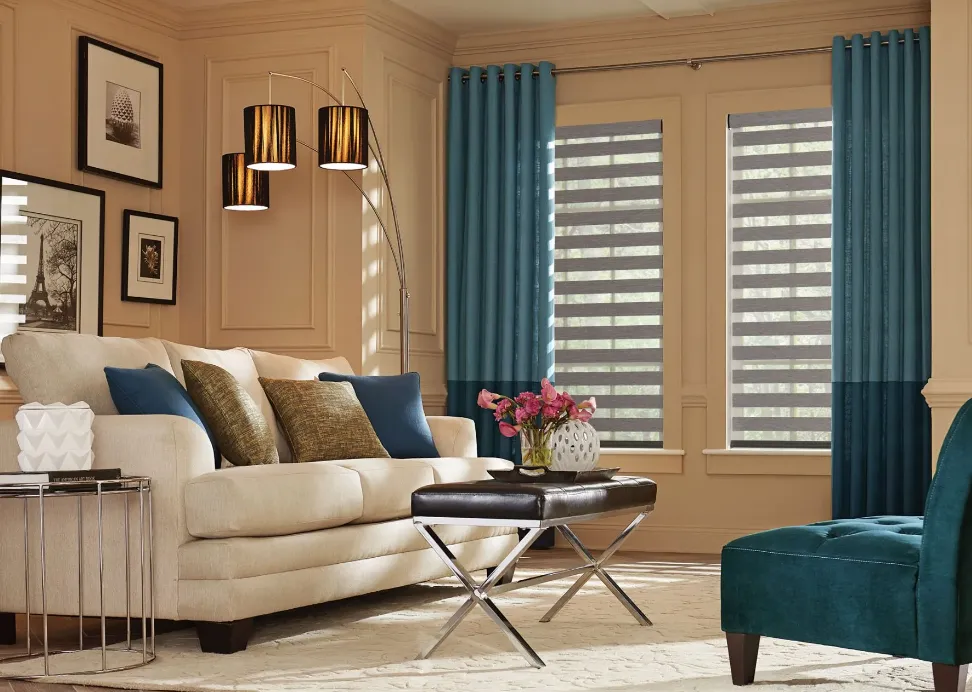
- Shades: A single piece of fabric or cellular material that raises and lowers as one unit. Softer look, wide range of opacity levels from sheer to blackout.
- Shutters: Solid hinged panels mounted directly into the window frame, with louvres that tilt together. The most permanent and durable of the three.
All three fall under what the industry calls blinds and shades and hard treatments generally, meaning they’re typically expected to stay with the home if you ever sell, unlike curtains or drapery, which usually move with the homeowner.
How Do I Choose Between Them for Each Room?
The room usually tells you what to prioritize before the style does. A few common starting points:
- Living rooms: Shades or blinds with light-filtering fabric work well here, since these rooms need flexibility between bright and cozy throughout the day.
- Bedrooms: Blackout shades or wood blinds help control morning light, especially in east-facing rooms.
- Kitchens and bathrooms: Faux wood blinds or composite shutters hold up better against humidity and daily wear than real wood or delicate fabrics.
- Home offices: Solar shades cut glare on screens while still letting in natural light during the workday.
If you’re outfitting a whole first home at once, it’s common to mix categories rather than pick just one. Many new owners choose wood blinds for living spaces, cellular shades for bedrooms, and save shutters for a statement room like a dining area or front-facing living room.
What Do Custom Window Treatments Typically Cost?
Budget expectations vary a lot by material and room count, but a general pattern holds across most homes. Blinds tend to be the most budget-friendly option and a practical way to outfit an entire house without overspending. Shades land in the mid-range, with pricing shifting based on fabric quality and whether you add motorization. Shutters cost the most upfront, but since they’re treated as a permanent fixture, many first-time owners view them as a long-term investment rather than a decorating expense.
A practical approach for a first home is to prioritize the rooms you’ll use and see most, then phase in higher-end treatments like shutters over time as budget allows. Bundling multiple windows into one order also tends to bring the per-window price down compared to ordering room by room, so it’s worth mapping out the whole house before you commit to a first purchase, even if installation happens in phases.
Seasonal promotions are also worth watching for. Many window treatment companies, Bartlett Blinds and Shutters included, run periodic sales on blinds, shades, and shutters, along with added discounts for veterans and first responders. Timing a larger order around one of these windows can meaningfully lower the total cost of outfitting a whole first home.
Should I Consider Motorized or Smart Window Treatments?
Motorization has become far more common and affordable than it was even a few years ago. Hunter Douglas window treatments with PowerView automation let you control shades by app, voice command, or schedule, which is especially useful for hard-to-reach windows or rooms where you want light to adjust automatically through the day. It’s not a requirement for a first home, but it’s worth asking about during a consultation if convenience and a modern, cordless look matter to you.
Common Mistakes First-Time Homeowners Make with Window Treatments
- Measuring windows themselves instead of having a professional measure, which leads to gaps or ill-fitting mounts on custom orders.
- Choosing style before function, ending up with treatments that look great but don’t actually block enough light or provide enough privacy.
- Buying ready-made blinds for oddly sized or older windows, where a custom fit matters more than in a newer, standard-size build.
- Overlooking humidity-prone rooms, then having wood products warp or swell in a kitchen or bathroom.
Most of these are easy to avoid with a short conversation before you order anything, which is exactly what an in-home consultation is designed to catch.
Getting Started in Your New Home
Outfitting a first home with custom window treatments doesn’t have to happen all at once, and it doesn’t have to be complicated. Bartlett Blinds and Shutters offers free in-home consultations for homeowners across Collegeville and the surrounding Pennsylvania communities, so you can get accurate measurements, see samples in your own lighting, and build a plan that fits your budget room by room. Schedule a free consultation to get started.
Frequently Asked Questions
Q: What’s the main difference between blinds and shades?
Blinds are made of individual slats that tilt for adjustable light control, while shades are a single piece of fabric or material that raises and lowers as one unit. Blinds offer more precise control, while shades tend to give a smoother, softer look.
Q: Are shutters worth the extra cost for a first home?
Shutters cost more upfront than blinds or shades, but they’re built into the window frame as a permanent fixture and typically last for decades. Many first-time owners treat them as a long-term investment rather than a standard decorating purchase, especially for rooms they plan to keep for years.
Q: How do I know what size blinds and shades I need?
For custom window treatments, a professional should measure each window in person rather than relying on self-measurement, since even small errors can affect how the final product fits and operates. A free consultation typically includes this step at no cost.
Q: What window treatments work best for humid rooms like kitchens and bathrooms?
Faux wood blinds and composite shutters are the most practical choices for humidity-prone rooms, since they resist warping, swelling, and cracking better than real wood or delicate fabric shades.
Q: Is it better to buy ready-made blinds or go custom for a first home?
Ready-made blinds can work for standard-size, newer windows, but custom window blinds are the better choice for older homes or windows with unusual dimensions. A custom fit reduces gaps around the edges and tends to operate more smoothly over time.
Q: Do I need motorized shades in my first home, or is that unnecessary?
Motorized shades aren’t a requirement, but they add real convenience for hard-to-reach windows, skylights, or rooms where you want light to adjust automatically. It’s worth discussing during a consultation even if you ultimately choose standard cordless options for most rooms.
Q: How long does it take to get custom window treatments installed after ordering?
Custom orders typically take a few weeks to fabricate before installation, since each piece is built to the exact measurements of your windows. Your consultant will give you a specific timeline based on the products and materials you choose.
Q: Which window treatments add the most value if I plan to sell later?
Shutters and other permanent, custom-fit blinds and shades are generally viewed as fixtures that stay with the home and support resale value, while curtains and drapery are considered personal decor that typically leaves with the seller.