Skip to content
Choosing the right blinds for your windows comes down to one essential question: how much light do you want in the room? This guide walks you through the key differences between light filtering blinds and blackout blinds so you can make a confident, informed choice for every room in your home.
When most people start shopping for blinds for windows, they focus on color or material first. But the single most important decision you will make is whether to go with light filtering blinds or blackout blinds. Both options serve distinct purposes, and picking the wrong one for a room can leave you frustrated long after installation day.
This guide covers exactly what each type does, where each one performs best, and how to decide which option belongs in each room of your home.
Contents
What Are Light Filtering Blinds?
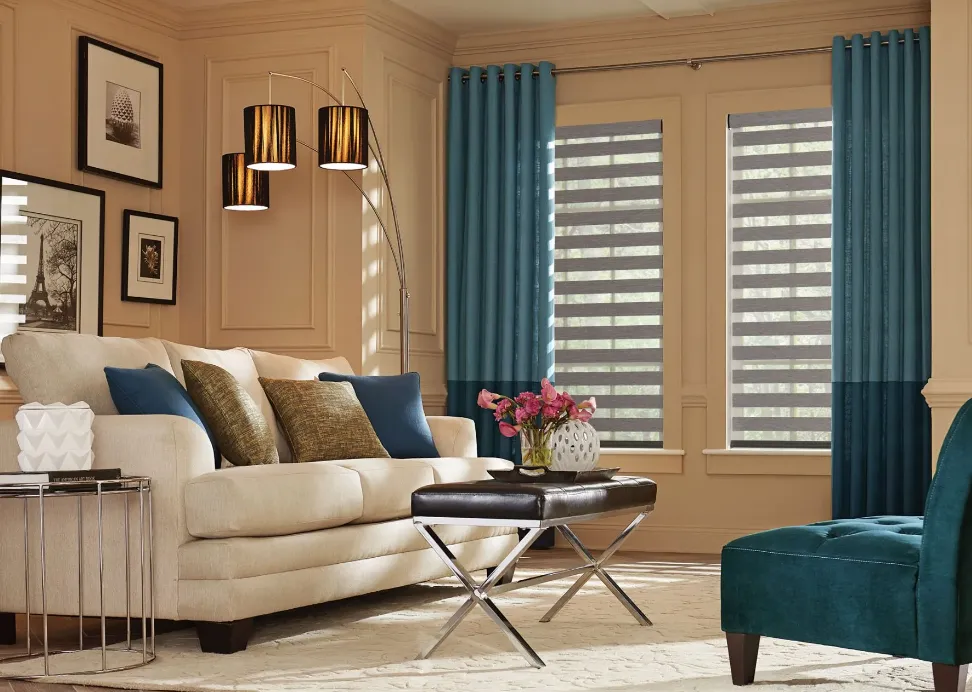
Light filtering blinds are designed to soften and diffuse natural sunlight rather than block it completely. When the sun shines through them, they create a warm, glowing effect that brightens a room without the harsh glare of direct sunlight. You still get the benefits of natural light, but it arrives gently and evenly distributed across the space.
These blinds provide a degree of daytime privacy because they obscure direct views from outside, though they do not make a room fully private at night when interior lights are on. Light filtering options are available in a wide range of fabrics, opacities, and styles including roller shades, cellular shades, and Roman shades.
What Are Blackout Blinds?
Blackout blinds are engineered to block virtually all incoming light. They use tightly woven or coated fabrics that prevent light from passing through the material. When properly fitted, a quality blackout blind can reduce light transmission to near zero, making a room feel like the middle of the night even on a bright afternoon.
Beyond light control, blackout blinds also offer enhanced privacy at all hours, reduce outside noise to a modest degree, and help insulate a room by blocking solar heat gain in summer and retaining warmth in winter. They are available in roller, cellular, and panel styles, often in the same aesthetic profiles as their light filtering counterparts.
Side-by-Side Comparison
Light Filtering Blinds:
- Softens and diffuses sunlight
- Maintains a bright, airy feel
- Daytime privacy from outside views
- Wide range of colors and textures
- Great for living and dining rooms
- Less effective at night for privacy
Blackout Blinds:
- Blocks nearly all incoming light
- Full privacy day and night
- Helps regulate room temperature
- Reduces outside noise slightly
- Ideal for bedrooms and nurseries
- Can make a room feel smaller if kept closed often
Which Room Needs Which Type?
The best way to approach this decision is room by room. Different spaces in your home have completely different lighting needs, and a one-size-fits-all approach rarely delivers satisfying results.
| Room | Recommended Type | Reason |
| Bedroom | Blackout | Supports deeper, uninterrupted sleep |
| Nursery or baby’s room | Blackout | Daytime naps require full darkness |
| Living room | Light Filtering | Keeps the space bright and welcoming |
| Kitchen | Light Filtering | Natural light aids cooking and visibility |
| Home office | Either | Depends on screen glare and work schedule |
| Media or home theater room | Blackout | Eliminates glare on screens |
| Dining room | Light Filtering | Ambient light enhances the dining experience |
| Bathroom | Light Filtering | Privacy with natural brightness |
Can You Use Both in the Same Room?
Absolutely. A layered window treatment approach is one of the most popular choices among interior designers. Many homeowners install light filtering blinds as the primary layer for daytime use and add a blackout roller or drape behind them for nighttime privacy and sleep. This setup gives you the flexibility to adjust the room’s light and privacy levels at any time of day without committing entirely to one extreme.
Dual shades, which combine both fabrics on a single roller mechanism, are another elegant solution. With one simple adjustment, you can switch between diffused daylight and complete darkness.
What About Energy Efficiency?
Both types of blinds for windows contribute to energy efficiency, but in different ways. Light filtering blinds reduce direct solar heat gain during summer months, which can lower air conditioning costs. Blackout blinds go further by adding an insulating layer that helps keep rooms cooler in summer and warmer in winter. Cellular blackout shades, in particular, are among the most energy-efficient window covering options available due to their honeycomb construction that traps air between the fabric layers.
Style and Aesthetics
One common concern is that blackout blinds will look heavy or institutional. Modern manufacturing has largely eliminated that problem. Today’s blackout blinds come in the same sleek, minimalist profiles as light filtering options. From neutral whites and warm linens to bold colors and wood-look finishes, both categories offer styles that work in traditional, contemporary, and transitional interiors.
When choosing blinds for windows purely on aesthetic grounds, you will find that the two categories are nearly identical in appearance. The difference lies entirely in what happens when the light hits the fabric.
Final Thoughts
The choice between light filtering blinds and blackout blinds is not about which option is better overall. It is about which one is right for each specific window and room. Take stock of how each room in your home is used, when it gets the most sunlight, and what level of privacy and light control the people using it actually need. Once you have that clarity, the right blind type for every window becomes an easy decision.
Frequently Asked Questions
1.What is the main difference between light filtering and blackout blinds?
Light filtering blinds soften and diffuse natural light, creating a bright, glowing effect while reducing glare. Blackout blinds use specially coated or tightly woven fabrics to block nearly all light from entering a room. The choice depends on how much natural light and privacy each room requires.
2. Are light filtering blinds good for bedrooms?
Light filtering blinds can work in a bedroom if you enjoy waking up with natural light. However, for people who sleep during the day, work night shifts, or are sensitive to morning light, blackout blinds are a much better fit. They create the dark environment the brain needs to produce quality sleep.
3.Do blackout blinds completely block all light?
High-quality blackout blinds block the vast majority of light through the fabric itself. However, small amounts of light can still sneak around the edges if there are gaps between the blind and the window frame. Installing blinds with side channels or choosing a close-fit mounting style helps eliminate this edge light.
4.Can light filtering blinds provide privacy?
Yes, but with limitations. During the day, light filtering blinds obscure direct views from outside while still letting light through. At night, when interior lights are on, the situation reverses and silhouettes can become visible from outside. For full nighttime privacy, blackout blinds or a layered treatment are the better choice.
5.Which type of blind is better for energy efficiency?
Both types contribute to energy savings. Light filtering blinds cut down on solar heat gain through the glass. Blackout blinds provide a stronger insulating barrier and are more effective at maintaining a consistent room temperature. Cellular blackout shades are particularly efficient due to their air-trapping honeycomb design.
6.Are blackout blinds suitable for living rooms?
Blackout blinds can work well in a living room that doubles as a media room or home theater. For a standard living room where a bright, welcoming atmosphere is the goal, light filtering blinds are usually the better choice. You can always add a blackout layer for when you want to watch a movie during the day.
7.What are dual shades and are they worth it?
Dual shades combine a light filtering fabric and a blackout fabric on the same roller mechanism. A simple adjustment shifts the panel between diffused daylight mode and complete darkness mode. They are an excellent option for rooms where your light needs change throughout the day, such as a home office or a bedroom with east-facing windows.
8.How do I choose the right blinds for windows in my home office?
It depends on your setup and schedule. If your monitor faces a window that gets direct sunlight, blackout or room-darkening blinds will eliminate screen glare. If you work primarily in the mornings and enjoy natural light, a light filtering blind with a solar shade rating between 3 and 5 percent openness offers a good balance of visibility and light control.
9.Do light filtering blinds come in the same styles as blackout blinds?
Yes. Both types are available in roller shades, Roman shades, cellular shades, and panel track systems. Modern production means that from a visual standpoint, light filtering and blackout blinds look nearly identical. The difference is in the fabric composition and coating, not the overall design aesthetic.